
The short answer: a child’s lying is usually a sign of development, not bad character. It starts when a child realises parents cannot read their mind, around age 2–3 (Raising Children Network). What matters is why the child lied and how we respond. Research suggests harsh punishment makes it worse, and praising honesty helps.
Why do children lie?
Raising Children Network lists these common reasons:
- To avoid trouble or punishment: the most common reason, after a mistake the child knows is wrong.
- Fear of disappointing parents: children with very high expectations on them may lie to save face (AAP).
- To get attention or look better.
- To get something they want.
- To test your reaction.
- Imagination and play: pretend stories are usually not lies before about age 4.
- White lies: to avoid hurting someone, sometimes learned from adults without meaning to (“tell them I’m asleep”).
The factor under the surface: a natural experiment with 84 children aged 3–4 compared two schools, one using frequent corporal punishment. Both groups peeked at a toy at similar rates, but 94% of children from the punitive school lied about it versus 55% in the other, and their lies were more skilled (Talwar & Lee, 2011). Children were not randomly assigned, so this is an indication, not proof, that fear teaches lying better than it teaches honesty.
Lying by age
Ages are approximate and every child matures at their own pace.
Ages 3–5: imagination more than lying
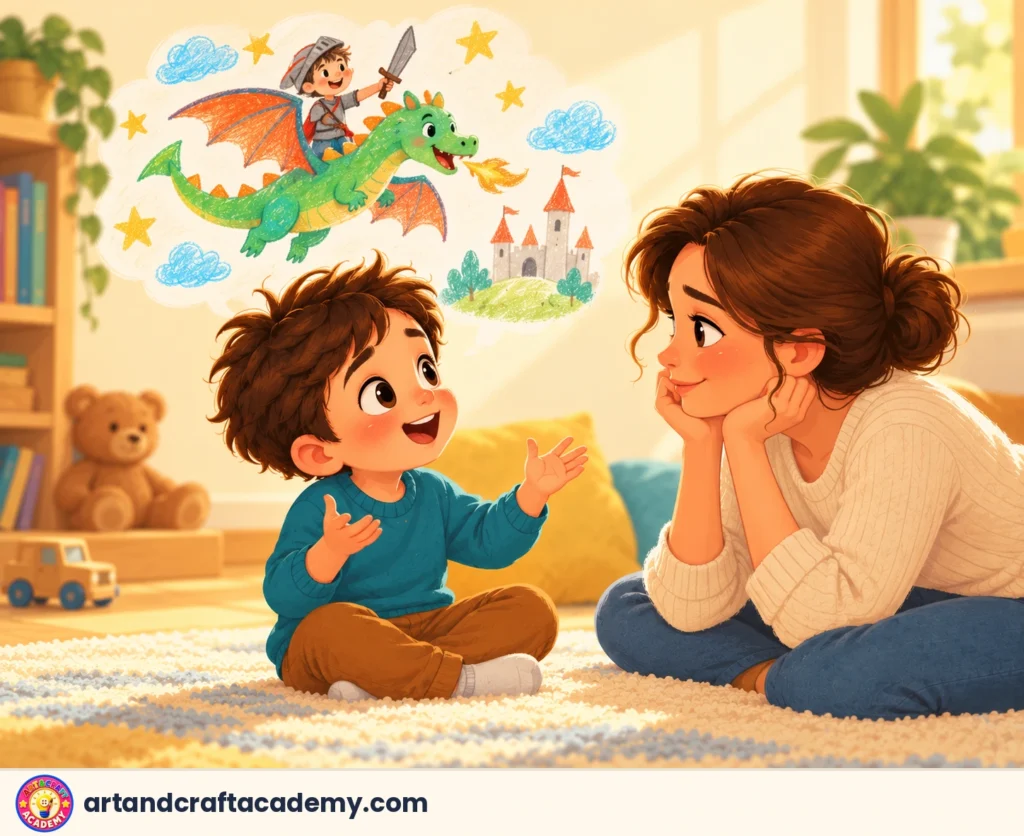
- Children this age do not always separate fantasy from reality, and pretend stories before age 4 are mostly not lies (Raising Children Network); AACAP says the same about ages 4–5.
- The real lie here is short: “I didn’t break it.”
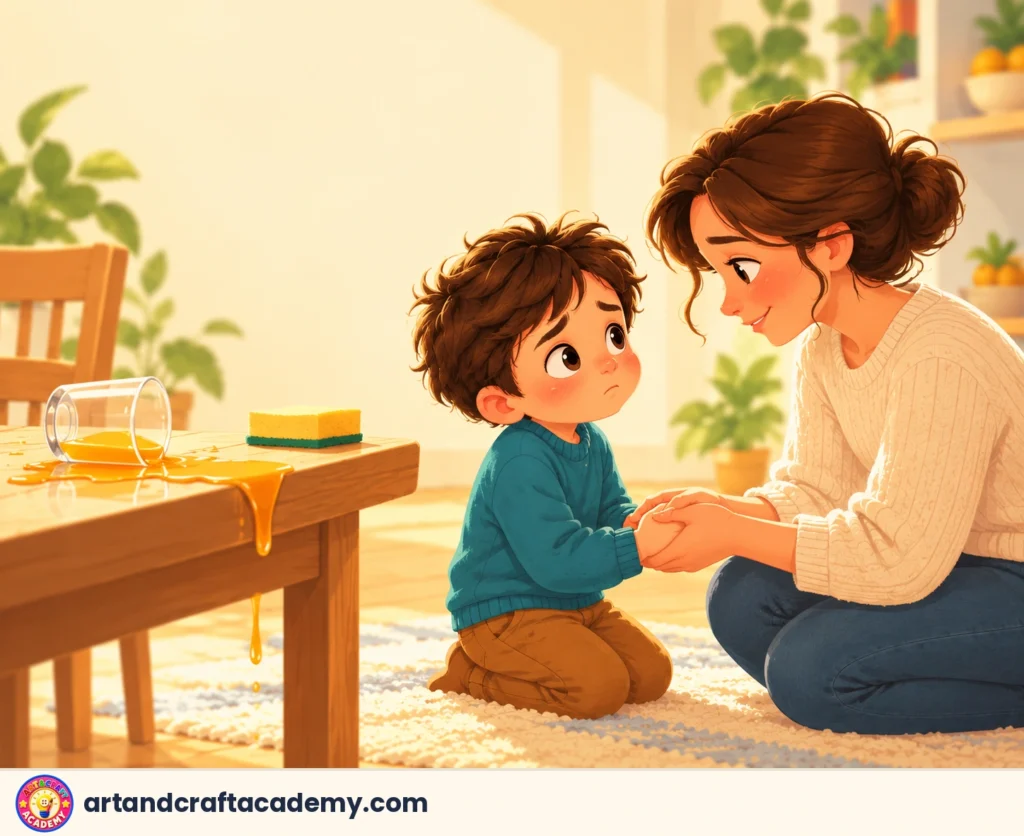
- What to do: ask fewer questions that corner the child. Instead of “Who broke the cup?” say “I see the cup is broken, let’s clean it up together.” Thank them when they own up.
Ages 6–8: lying to escape
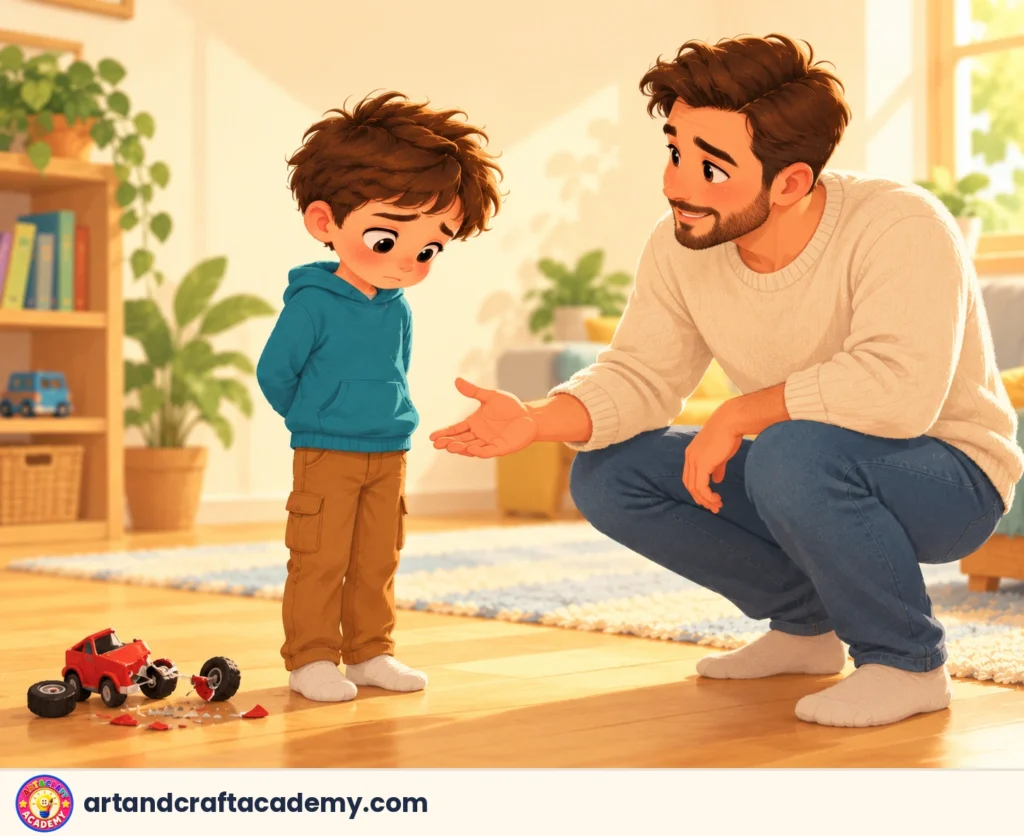
- After about age 6, children often lie after something they know is wrong, to avoid punishment or disappointing you (AAP). Exaggeration to look good in front of friends also appears.
- What to do: calmly say you know the truth without repeated questioning, and give separate consequences for the lie and the mistake (Raising Children Network). For example: clean the spilled juice together, and talk about how the lie weakened your trust.
Ages 9–12: peer pressure and avoidance
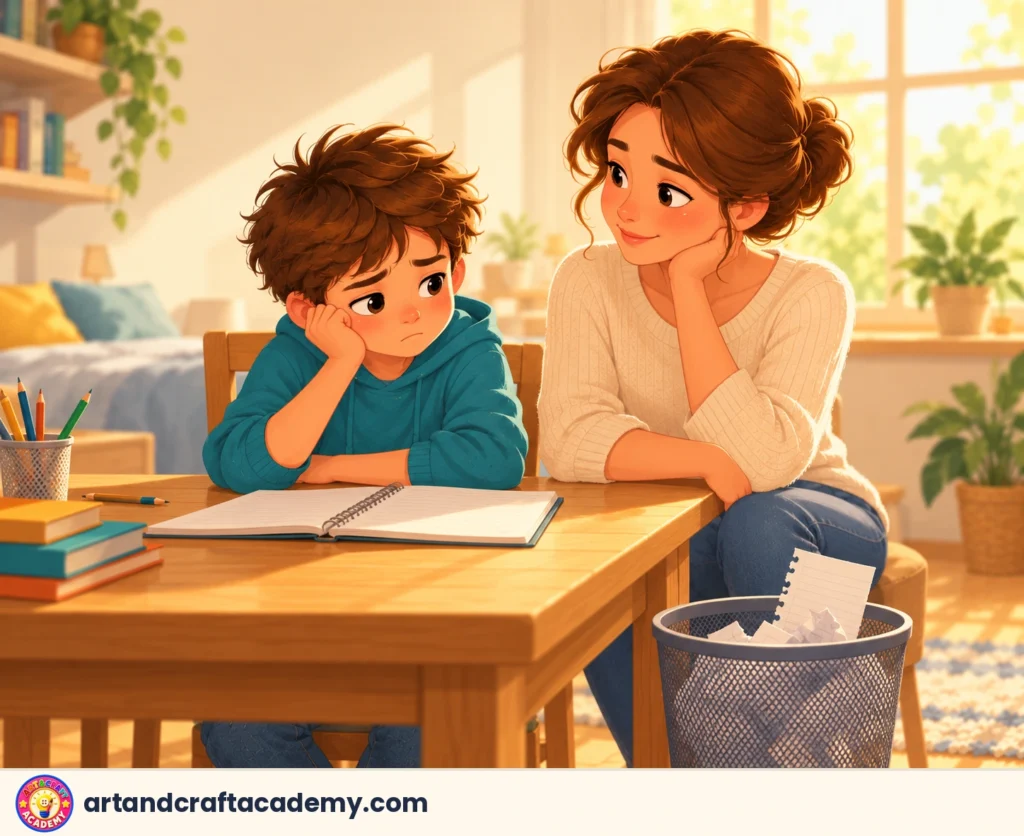
- The sources we relied on do not single out this age, but AACAP notes older children may lie to avoid a task or to avoid facing what they did.
- What to do: talk about trust: the more someone lies, the less people believe them. Teach alternatives, such as “I’m embarrassed about what happened, but I’ll tell you.”
Ages 13 and up: independence and privacy

- AACAP notes teens may withhold details to protect privacy or feel independent, and may lie to hide a bigger problem such as smoking or drugs because they fear serious consequences.
- What to do: separate normal privacy from a lie that hides danger. Make honesty safe: “Anything you tell me honestly, we’ll solve together, whatever it is.”
How to handle lying: six steps
- Don’t ask if you already know the answer. Say calmly, “I know that isn’t true,” instead of repeated questioning (Raising Children Network).
- Stay calm before you respond. Harsh punishment is not effective (AAP) and may teach a child to lie more skilfully.
- Separate the mistake from the lie. Each gets a consequence that fits it.
- Describe the behaviour, don’t label the child. Say “that isn’t true”, not “you’re a liar”, since a child may come to believe the label (Raising Children Network).
- Explain the cost: lying breaks trust, and telling the truth brings less trouble (AAP).
- Fix the mistake together. The aim is teaching, not humiliating.
When to consult a specialist: if lying becomes a repeated pattern, the stories are elaborate and the child enjoys the attention, the child shows no concern unless caught, or the lying hides a serious problem (AACAP). If you suspect they are lying to hide bullying or harm, reassure them they will be safe if they tell you.
How to encourage honesty
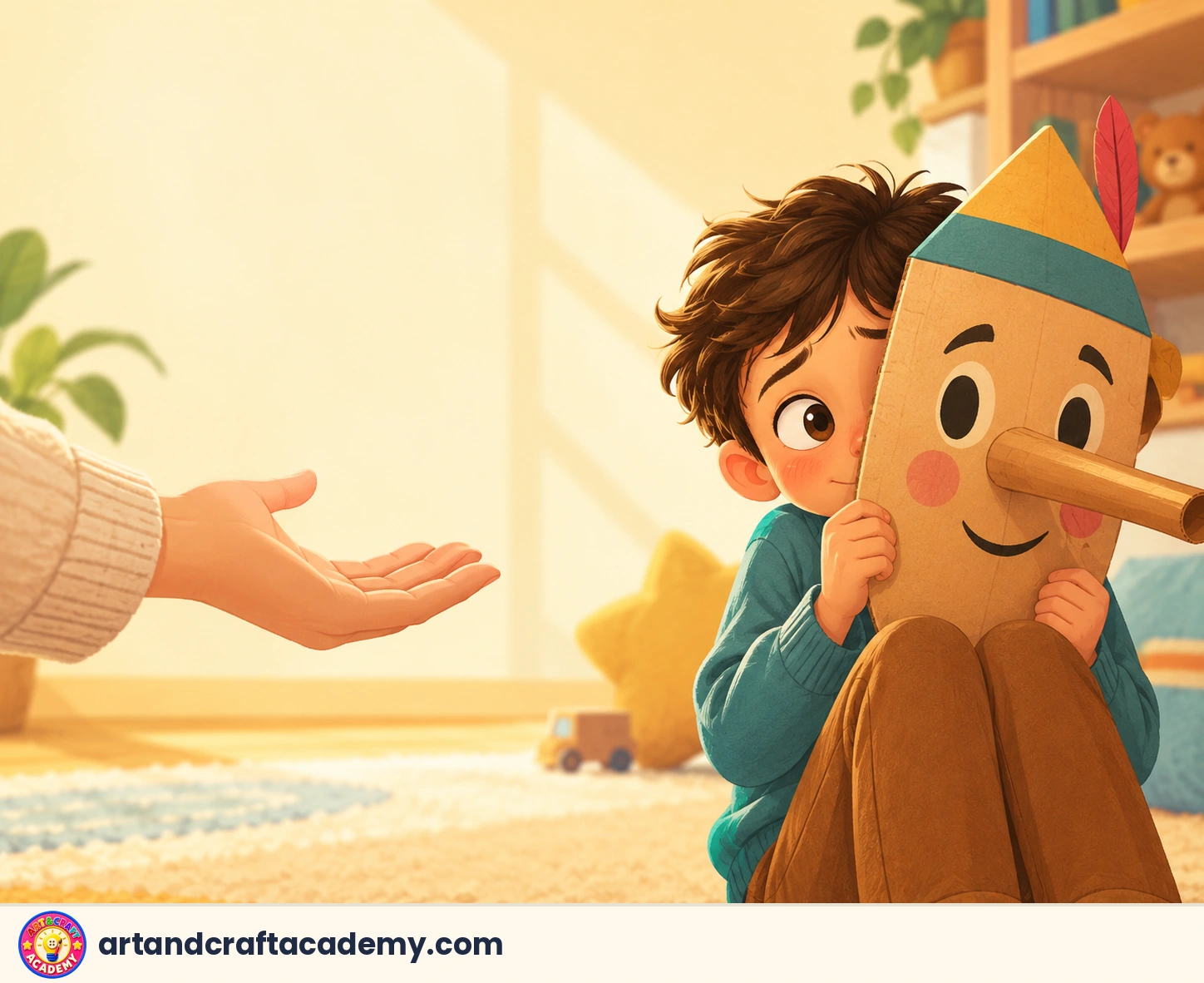
The strongest evidence: in a study of 268 children aged 3–7, the George Washington story, in which his father praises him for admitting a mistake, made children about three times more likely to tell the truth. Warning stories such as Pinocchio and The Boy Who Cried Wolf did no better than a neutral story, and the effect vanished when researchers gave the Washington story a negative ending (McGill University). Takeaway: focus on rewarding honesty, not on fear of lying. The researchers note the long-term effect is not yet proven.
- Thank them for owning up: “Thank you for telling me, that took courage.”
- Model it: admit your own mistakes and avoid white lies in front of them (AAP).
- Reduce the temptation to lie: “The milk spilled, let’s wipe it up” rather than “Who did this?”
- A family rule: “In our home, honesty matters more than any mistake.”
- Stories that praise honesty: read stories where someone admits a mistake and is respected for it.
Friends who lie a lot

These are practical parenting tips, not drawn from a specific study. The idea is to prepare the child to choose better company, not to forbid friendship.
- Don’t attack the friend. Your child will defend them. Ask instead: “What bothers you when he says things that aren’t true?”
- Help your child notice: people who lie a lot lose others’ trust, the same lesson as above.
- Practise a refusal line: “I won’t lie for you, and I’m not going to lie for anyone.”
- Build alternatives: invite other friends over or sign up for a group activity, since banning everyone only moves the problem.
- Keep home a safe place: a child who tells you what happens with friends is a child you can protect.
- Watch for bullying: if your child hides what is happening to them, reassure them they are safe if they tell you (Raising Children Network).
Frequently asked questions
Is it normal for a child to lie? Usually yes. It typically starts after about age 2, when children discover you cannot read their mind (Raising Children Network).
Should I punish my child for lying? Use a mild consequence, separate from the mistake. Harsh punishment is not effective.
Should I call my child a liar? No. Describe the behaviour only, because the label can stick.
When should I see a specialist? When lying is a repeated pattern, hides a serious problem, or the child shows no concern about it.
Sources
- American Academy of Pediatrics (HealthyChildren.org): When Children Lie
- Raising Children Network (Australia): Lies – preschoolers
- Raising Children Network: Lies – school-age children
- AACAP: Children and Lying (Facts for Families)
- McGill University: Stories that motivate children to be honest
- Talwar & Lee (2011): A punitive environment fosters children’s dishonesty (study summary)